How we work
A clear working model
From an operational objective to dependable software. Work progresses through six defined stages, with clear scope, deliverables and decision points. Customers remain in control and decide at each stage whether and how to continue.
Engagement model
How we work
A software engagement should reduce uncertainty before it increases commitment.
Trentinian starts with a focused conversation, moves into a defined Discovery engagement, and only then proposes larger implementation phases. Customers gain evidence and working results at each stage before deciding whether to continue.
Step 01

Start with a conversation
The first step is a short introductory conversation about the business problem, the current situation and what the organisation wants to achieve.
The objective is to establish enough context to identify the most appropriate starting point, normally a Custom Software Assessment.
Step 02

Define the engagement
Based on the initial conversation, Trentinian defines the questions to resolve, the scope of the engagement, the work to perform and the expected deliverables.
The scope, deliverables, schedule and price are agreed before the engagement begins. The engagement is contracted separately from any subsequent implementation work.
Step 03

Discover and assess
The engagement begins with Discovery to establish the objectives, priorities and scope of the assessment. Trentinian then performs a focused technical review designed around the questions that need to be answered.
The assessment is evidence-based and adapted to the situation — whether evaluating an existing application, a new software initiative, a modernisation project or another technical decision.
Step 04
Review the findings and agree the direction
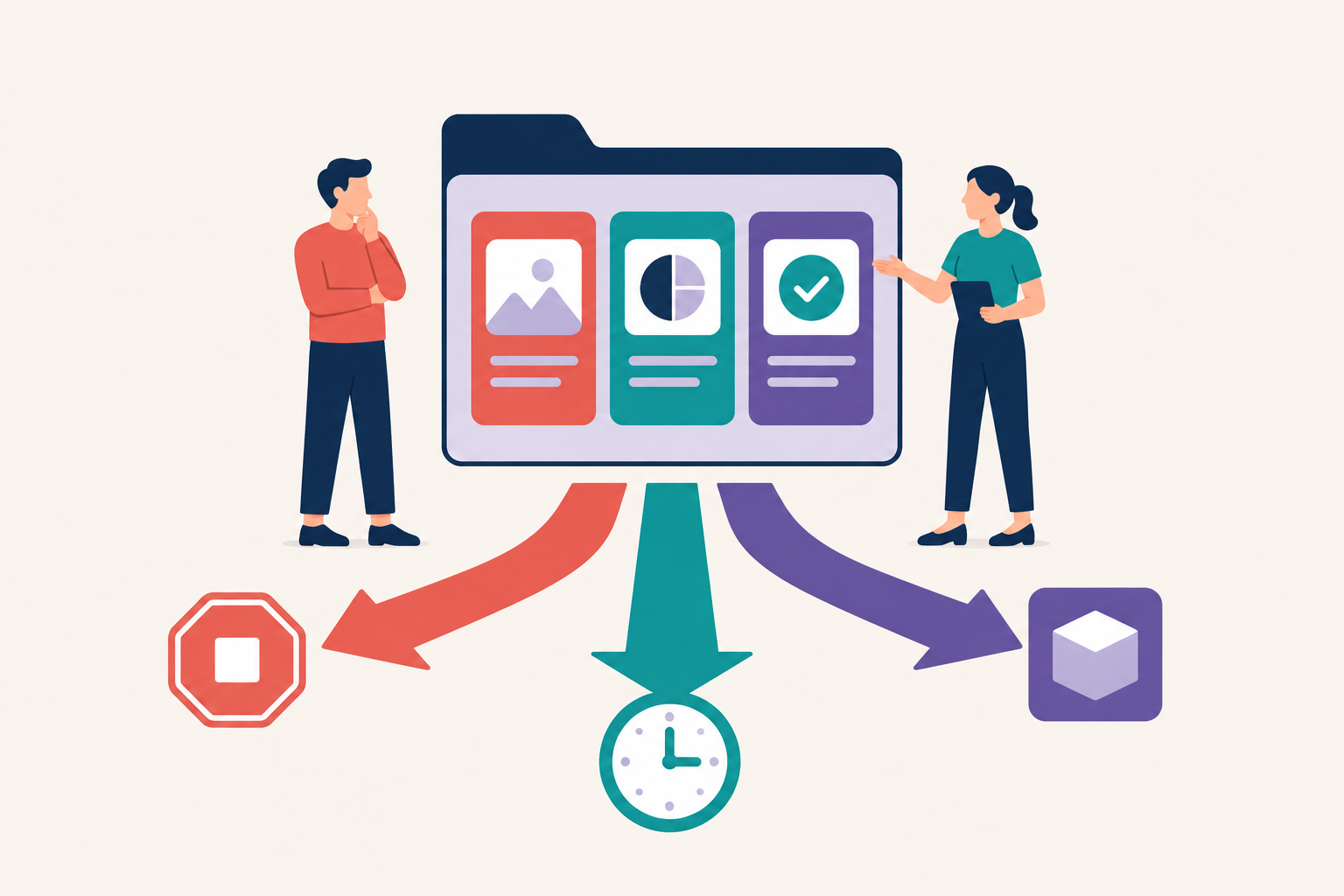
The engagement concludes with a dedicated Findings Workshop. Trentinian presents the evidence, findings, conclusions and recommendations, and works through their implications with the customer before agreeing on the appropriate direction.
We reserve an afternoon for this workshop. The findings are discussed, challenged where necessary and translated into agreed priorities and clear next steps.
Step 05
Deliver in defined phases
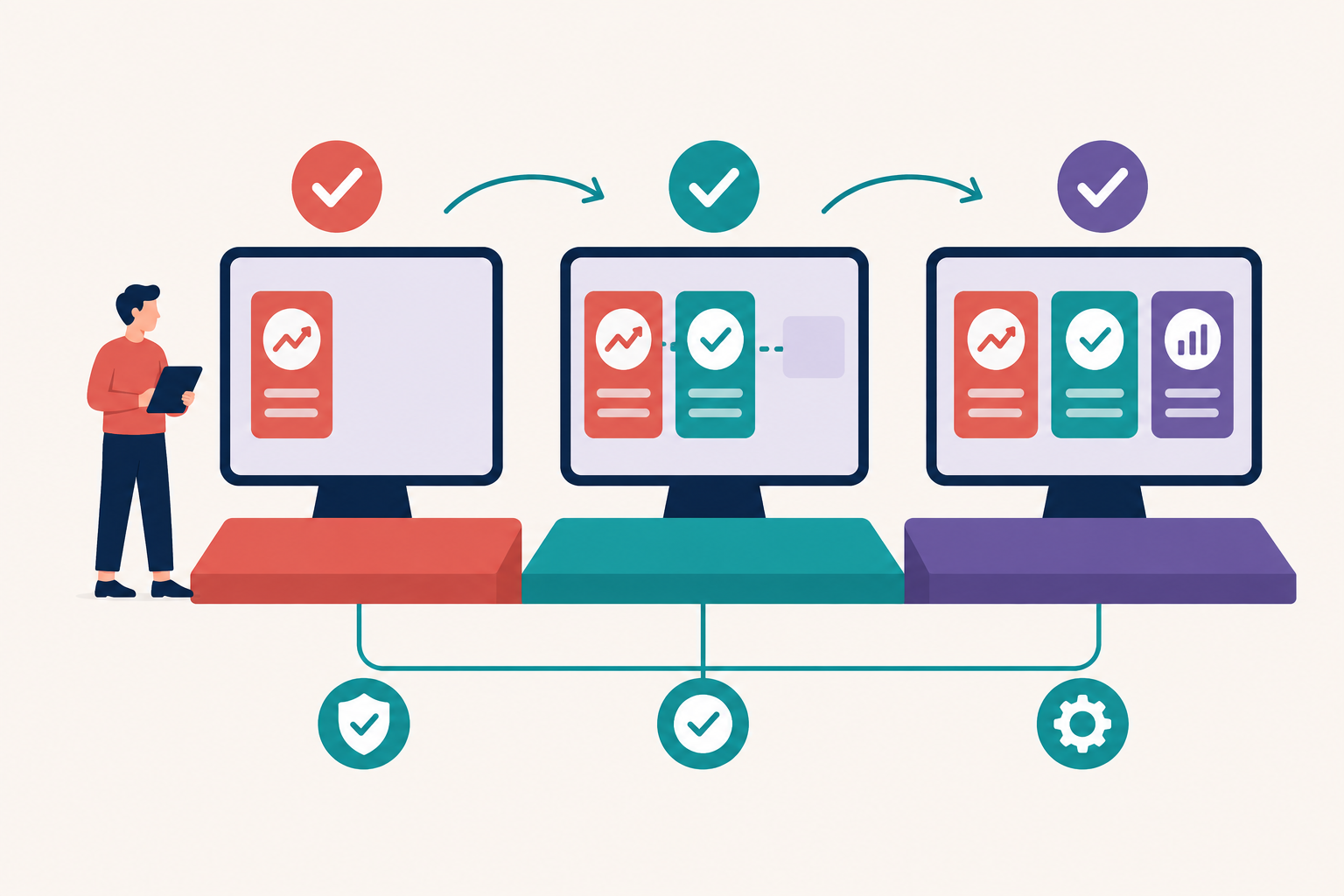
Implementation is organised into defined phases with agreed functionality, deliverables and pricing. Working software is delivered incrementally and refined through feedback.
Before each phase, priorities and scope are reviewed with the customer. During delivery, working software is demonstrated regularly so feedback can guide implementation and shape subsequent phases.
Step 06

Launch, maintain and improve
The application is prepared for dependable production use and launched according to the agreed deployment, support and operational arrangements.
The customer retains ownership and control throughout. Trentinian can remain the engineering partner for maintenance, support and continued evolution.
Ownership & control
Asset ownership & independence
The customer retains ownership of the application and its source code.
Trentinian can assume technical responsibility for designing, maintaining, supporting and evolving the software without taking ownership or control away from the customer.
The objective is to create continuity and technical accountability while preserving customer independence and avoiding unnecessary technical or commercial lock-in.
Ownership
The customer retains ownership of the application, its source code and related technical assets.
Control
The customer remains in control of priorities, data, vendor choices and strategic technical decisions.
Technical responsibility
Trentinian assumes responsibility for engineering quality, maintenance, security and operational continuity.
Technical responsibility without lock-in
Trentinian can remain the accountable technical partner for the application while the customer retains ownership and control of the underlying software and technical assets.
The working relationship should continue because Trentinian provides value, engineering knowledge and technical continuity — not because leaving has been made technically difficult.
Security, privacy & resilience
Considered throughout the lifecycle
Security, privacy and resilience are engineering inputs across the software lifecycle, not separate add-ons.
Trentinian considers the security, privacy, availability and recovery requirements of a system from discovery through implementation, deployment and continued operation.
The objective is not to maximise controls at any cost, but to design protections that are proportionate to the business value, sensitivity and operational risk of the software.
Security
Identity, access control, trust boundaries, dependencies and vulnerability analysis.
Privacy
Sensitive-data handling, access boundaries, retention and appropriate logging.
Operational resilience
Monitoring, failure handling, backup, recovery and production diagnostics.
Start a conversation
Tell us about your project.
Whether you are considering custom software that previously seemed too expensive, taking a prototype toward production, or trying to understand and maintain an existing application, the first step is a short conversation about the problem and whether Trentinian’s engineering model is a good fit.